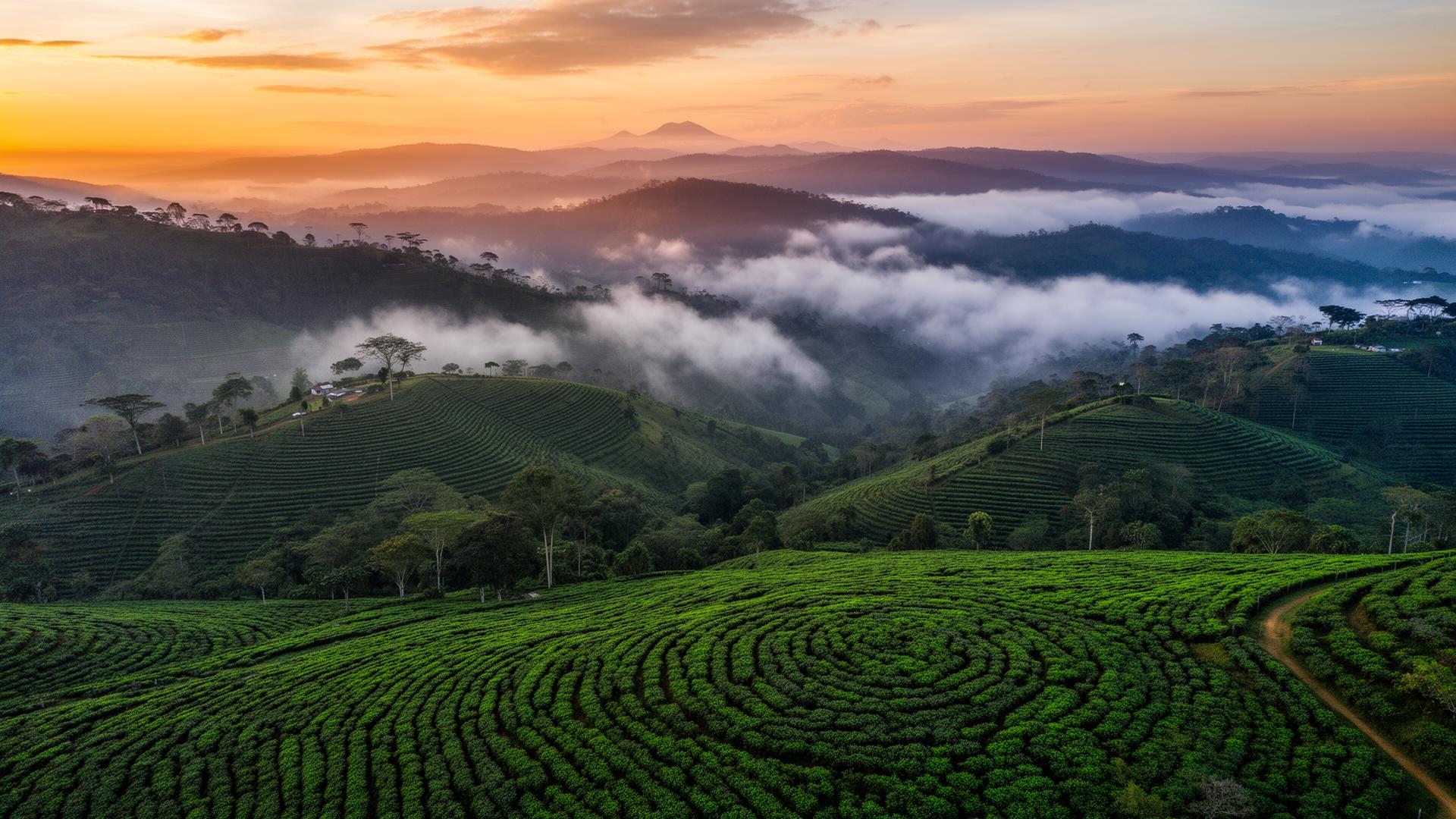
Colombian Andes at sunrise

One origin at a time

Colombia, one coffee at a time.

We'll discover the coffee regions of Colombia one by one. We start with Huila — the most awarded department in the country — and our first coffee, Huila Reserve.

1,100–2,300 m
altitude in specialty zones
harvests per year due to equatorial position
+800K
coffee families in Colombia

The geography that makes it possible

Why Colombia is unrepeatable

The Colombian Andes create unique conditions on Earth: three parallel mountain ranges that generate dozens of distinct microclimates in a relatively small territory. The result is a diversity of flavor profiles impossible to find in any other producing country.

The science of Andean terroir

At higher altitudes, the bean ripens more slowly under cooler temperatures. This process concentrates sugars, acids and aromatic compounds — including chlorogenic acid, one of the most powerful antioxidants in food. High-altitude Colombian coffees can contain up to 40% more chlorogenics than beans grown at lower elevations.

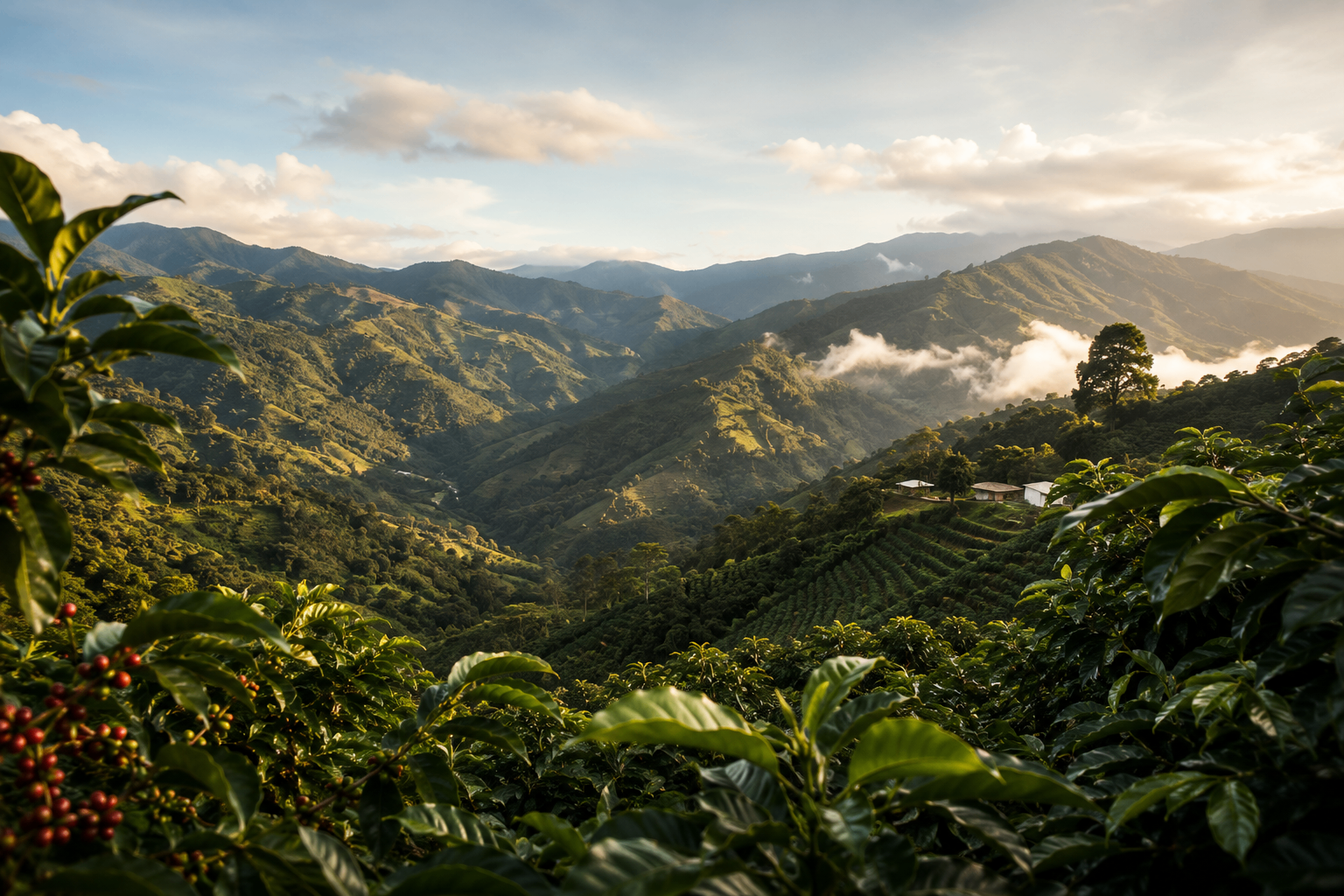
Huila coffee landscape

Southern Colombia · Andean Massif

01

Huila

The most awarded department in Colombia

Where extreme altitude and the Magdalena river create irreplicable conditions for specialty coffee.

1,400–2,100 m
Average altitude
2
Harvests per year
#1
Most awarded department

Dominant flavor profile

Passion fruitPanelaCaramelTamarindGreen appleHibiscusMilk chocolate

Why Huila tastes like Huila

The Colombian Massif to the south, the Magdalena and Suaza valleys, and thermal variations of up to 15 °C between day and night generate controlled thermal stress in the bean. This stress concentrates sugars and organic acids, producing the bright acidity and panela sweetness that define the Huila profile.

Municipalities and subregions

The territory in detail

Acevedo

1,500–2,000 m

For many, the finest municipality in Huila. Slopes of the Massif, mineral-rich volcanic soils. Pioneers of honey and natural processes in Colombia, today they export competition lots to Japan and Scandinavia.

Passion fruit · Sugar cane · Floral · Guava

Cup profile

Intense tropical fruit · Cane sweetness · Bright citric acidity · Creamy body · Long, clean aftertaste

01

Palestina

1,600–1,900 m

One of the most balanced coffees in Huila. The influence of the Suaza river regulates humidity during drying, giving washed lots exceptional clarity.

Green apple · White chocolate · Green grape

Cup profile

Green apple · White chocolate · Tartaric acidity · Medium-high body · Sweet finish

02

San Agustín

1,700–2,100 m

At the gates of the Archaeological Park — UNESCO Heritage. Extreme altitude and fertile volcanic ash. Greater complexity, structure and mineral notes.

Hibiscus · Plum · Dark cocoa · Mineral

Cup profile

Plum · Hibiscus · Minerality · Lively acidity · Aftertaste with notes of dark cocoa

03

Pitalito

1,200–1,800 m

The largest coffee municipality in Huila by volume. The profile that put the department on the international map: tropical fruit, balanced sweetness and generous body.

Peach · Panela · Caramel · Tropical

Cup profile

Peach · Panela · Caramel · Full body · Gentle acidity — the textbook Colombian

04

Upcoming origins

One coffee at a time.

The other coffee regions of Colombia — Eje Cafetero, Antioquia, Cauca, Nariño, Sierra Nevada — will arrive in their time. Each origin deserves its own story, its own cup, its own moment.